The Complete Nursing Charting Blueprint: Proven Strategies for Precision, Compliance, and Better Outcomes
 Nurse Stephanie
Nursing Charting: Importance, Methods, Best Practices, and the Future of Clinical Documentation
Nursing charting is a critical component of patient care, enabling healthcare professionals to systematically record patient information, clinical observations, treatments, and outcomes. Therefore, Accurate nursing documentation serves as the foundation for effective communication among healthcare teams, supports clinical decision-making, promotes patient safety, and ensures compliance with legal and regulatory requirements.
However, over the decades, nursing charting has evolved significantly. Early healthcare documentation relied heavily on handwritten notes that nurses carefully recorded in patient files. While these traditional methods provided an essential record of patient care, they were often time-consuming, difficult to organize, and susceptible to human error. As healthcare systems grew more complex, therefore the need for faster, more accurate, and more accessible documentation methods became increasingly apparent.
What Is Nursing Charting?
Nursing charting refers to the process of documenting all relevant aspects of patient care, including assessments, interventions, medications, responses to treatment, and changes in health status. These records create a comprehensive timeline of a patient's healthcare journey and ensure continuity of care across different providers and departments.
Effective nursing charting helps healthcare teams:
- Monitor patient progress
- Communicate critical information
- Support treatment planning
- Reduce medical errors
- Meet legal and ethical requirements
- Improve patient outcomes
- Facilitate quality assurance and audits
Because patient records are often used by physicians, specialists, therapists, pharmacists, and administrative staff, accurate documentation is essential for coordinated healthcare delivery.
The Evolution of Nursing Documentation
Traditional Paper-Based Charting
Historically, nurses documented patient information manually using paper charts and standardized forms. This method required recording:
- Vital signs
- Medical history
- Medication administration
- Physician orders
- Nursing assessments
- Treatment plans
- Progress notes
- Discharge instructions
While paper charting remained the industry standard for many years, it presented several limitations:
Challenges of Manual Nursing Documentation
Time-Consuming Processes
Paper documentation often requires extensive handwriting and repetitive data entry, reducing the amount of time nurses can spend providing direct patient care.
Legibility Issues
Handwritten notes can be difficult to read, potentially leading to misunderstandings, medication errors, or delayed treatment decisions.
Limited Accessibility
Physical charts can only be accessed in one location at a time, making collaboration among healthcare professionals more challenging.
Risk of Lost or Damaged Records
Paper records can be misplaced, damaged, or destroyed, potentially compromising patient safety and continuity of care.
Storage Requirements
Healthcare organizations must allocate significant space and resources to maintain and archive paper records.
Electronic Health Records (EHRs): Transforming Nursing Charting
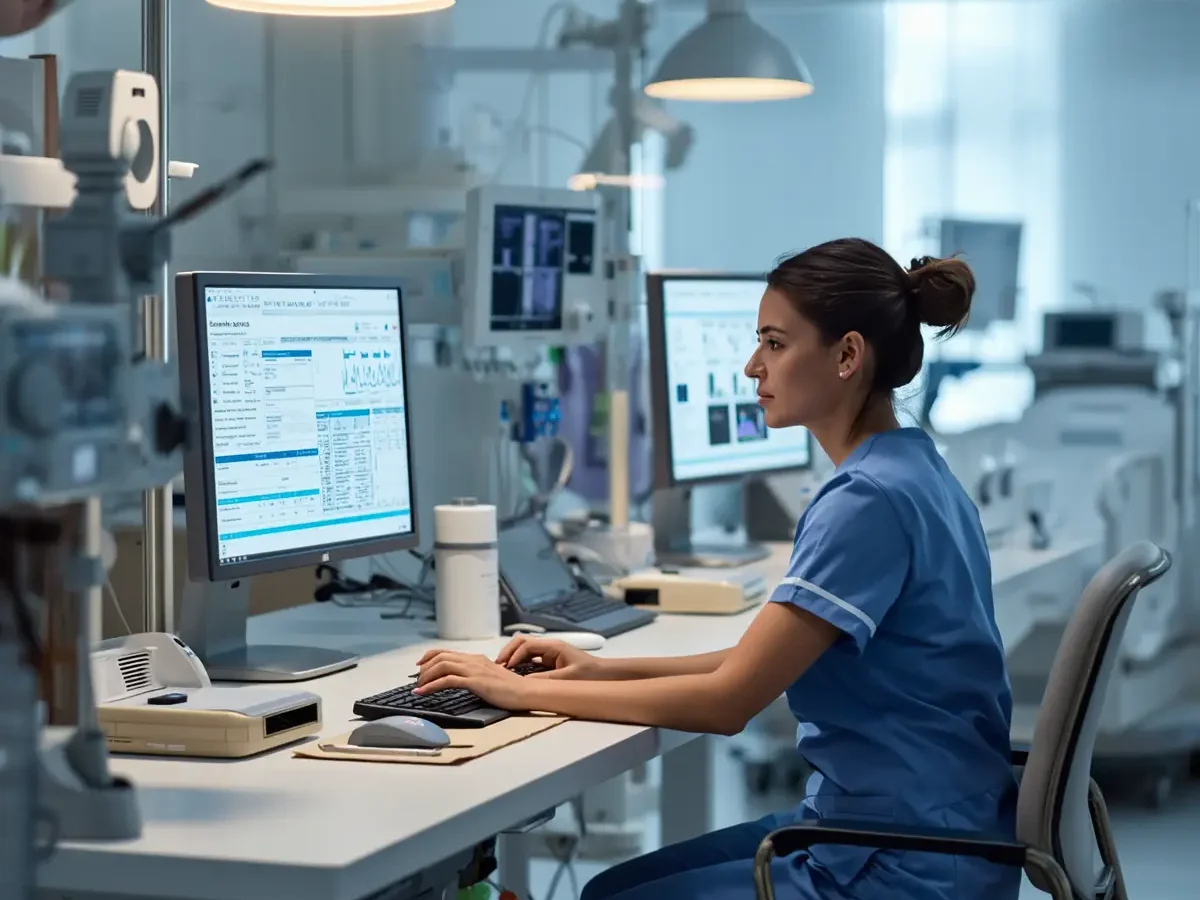
The introduction of Electronic Health Records (EHRs) has revolutionized nursing documentation. EHR systems allow nurses to document patient information digitally, improving accuracy, accessibility, and efficiency.
In addition, modern EHR platforms provide healthcare teams with real-time access to patient records, allowing clinicians to make informed decisions quickly and effectively.
Benefits of Electronic Nursing Charting
Improved Accuracy
Digital systems reduce transcription errors and often include automated checks to ensure documentation completeness.
Enhanced Patient Safety
EHRs can generate alerts for allergies, medication interactions, abnormal lab values, and other critical clinical concerns.
Faster Access to Information
Healthcare providers can instantly retrieve patient records from multiple locations, improving collaboration and care coordination.
Better Regulatory Compliance
Electronic systems help organizations meet healthcare documentation standards and maintain comprehensive audit trails.
Streamlined Workflows
Features such as templates, dropdown menus, and voice recognition technology help reduce documentation time and increase productivity.
Essential Components of Nursing Charting
Accurate nursing documentation typically includes several key elements:
Patient Assessment
Comprehensive assessments include physical, emotional, psychological, and social health observations.
Vital Signs Documentation
Recording temperature, pulse, respiration, blood pressure, oxygen saturation, and pain levels provides essential information about patient status.
Medication Administration Records (MAR)
Documentation should include:
- Medication name
- Dosage
- Route of administration
- Time administered
- Patient response
- Any adverse reactions
Nursing Interventions
All nursing actions performed should be documented clearly, including treatments, patient education, and care coordination activities.
Patient Progress Notes
Progress notes track changes in condition, treatment effectiveness, and ongoing care needs.
Communication Records
Documentation of physician notifications, interdisciplinary consultations, and family discussions supports continuity of care.
Best Practices for Effective Nursing Charting
To maintain high standards of documentation, nurses should follow established best practices.
Document in Real Time
Recording information as close to the event as possible improves accuracy and reduces the risk of omitted details.
Be Objective and Accurate
Documentation should focus on observable facts rather than assumptions or personal opinions.
Use Approved Medical Terminology
Standardized abbreviations and clinical language help ensure consistency across healthcare teams.
Maintain Confidentiality
Patient information must be protected in accordance with privacy regulations and organizational policies.
Chart Completely and Thoroughly
Incomplete documentation can create gaps in care and increase legal liability risks.
Correct Errors Properly
Documentation corrections should follow organizational policies and maintain transparency.
Legal and Ethical Importance of Nursing Documentation
Nursing charting serves as a legal record of patient care. Accurate documentation can provide evidence that appropriate care was delivered and that clinical standards were followed.
From a legal perspective, nursing records may be reviewed during:
- Medical malpractice cases
- Regulatory audits
- Accreditation reviews
- Insurance claims investigations
- Quality improvement initiatives
Ethically, thorough charting supports patient rights, informed decision-making, and professional accountability.
Common Challenges Nurses Face in Documentation
Despite technological advances, many nurses continue to encounter documentation challenges, including:
- Heavy workloads
- Time constraints
- Documentation fatigue
- Complex EHR systems
- Frequent interruptions during charting
- Regulatory documentation requirements
Healthcare organizations increasingly invest in training, workflow optimization, and advanced technologies to address these challenges.
The Future of Nursing Charting
Emerging technologies continue to reshape healthcare documentation practices.
Artificial Intelligence (AI)
AI-powered documentation tools can assist nurses by automating routine charting tasks, identifying missing information, and improving documentation quality.
Voice Recognition Technology
Speech-to-text systems allow nurses to document patient care more efficiently while maintaining clinical accuracy.
Mobile Documentation Solutions
Smartphones and tablets enable point-of-care charting, reducing delays between care delivery and documentation.
Predictive Analytics
Advanced systems can analyze charting data to identify patient risks and support proactive clinical interventions.
Interoperability Improvements
Future healthcare systems aim to improve communication between organizations, allowing patient information to be shared securely across different care settings.
Why Accurate Nursing Charting Matters
High-quality nursing documentation directly impacts patient safety, care coordination, regulatory compliance, and healthcare outcomes. Whether using traditional methods or advanced electronic systems, nurses play a vital role in maintaining accurate and comprehensive patient records.
Therefore, as healthcare technology continues to evolve, nursing charting will remain a cornerstone of effective patient care, supporting informed clinical decisions and helping healthcare organizations deliver better outcomes for patients.
Learn more about professional standards: American Nurses Association (https://www.nursingworld.org/).