
The Making of a Compassionate Nurse: Why Compassion Is Your Greatest Clinical Skill
 Nurse Stephanie
The Making of a Compassionate Nurse
Nursing is much more than administering medications, monitoring vital signs, or documenting patient care. At its heart, nursing is about people. Behind every diagnosis is a human being experiencing fear, uncertainty, pain, and hope. While clinical knowledge saves lives, compassion changes lives.
Compassion is often described as the ability to recognize another person's suffering and take action to help. For nurses, compassion is not simply a personality trait—it is a professional responsibility that strengthens therapeutic relationships, improves patient outcomes, and creates a healthier healthcare environment.
Whether you're a nursing student preparing for your first clinical rotation or an experienced registered nurse with years of bedside experience, compassion remains one of the most valuable skills you'll ever develop.
What Does It Mean to Be a Compassionate Nurse?
A compassionate nurse sees beyond the medical chart.
Instead of focusing only on laboratory values, medications, and procedures, compassionate nurses recognize the emotional, psychological, spiritual, and social needs of every patient.
Compassion means:
- Listening without interrupting.
- Treating every patient with dignity and respect.
- Being present during difficult moments.
- Speaking kindly even under pressure.
- Advocating for patients who cannot advocate for themselves.
- Providing comfort when medicine cannot provide a cure.
Patients often forget the details of their hospitalization, but they rarely forget how a nurse made them feel.
Why Compassion Matters in Nursing
Healthcare has become increasingly fast-paced. Nurses often care for multiple patients, complete extensive documentation, respond to emergencies, and coordinate with interdisciplinary teams.
Despite these challenges, compassionate care continues to make a measurable difference.
Research has shown that compassionate nursing can contribute to:
- Greater patient satisfaction
- Increased patient trust
- Better communication
- Improved treatment compliance
- Reduced anxiety
- Better emotional recovery
- Stronger nurse-patient relationships
When patients feel heard, they become active participants in their care instead of passive recipients.
Compassion Begins with Empathy
Empathy and compassion are closely related but not identical.
Empathy is understanding another person's feelings.
Compassion goes one step further.
Compassion motivates action.
For example:
A patient receives a cancer diagnosis.
An empathetic nurse understands the patient's fear.
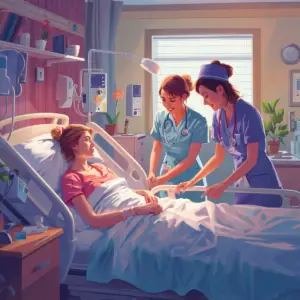
A compassionate nurse sits beside the patient, listens, answers questions honestly, contacts additional support services, and reassures the patient that they will not face the journey alone.
Compassion transforms understanding into meaningful care.
The Small Moments That Matter Most
Many nurses believe they need extraordinary acts to demonstrate compassion.
The truth is, compassion often appears in ordinary moments.
Holding a patient's hand before surgery.
Explaining a medication one more time without frustration.
Helping an elderly patient brush their hair.
Remembering a patient's preferred name.
Adjusting a blanket because the patient feels cold.
Calling family members with updates when appropriate.
These moments may seem insignificant to a busy nurse, but they can become unforgettable memories for patients and families.
Compassion Is Also Patient Advocacy
One of the greatest expressions of compassion is advocacy.
Compassionate nurses speak up when patients cannot.
They question unsafe orders.
They ensure pain is properly addressed.
They protect vulnerable patients.
They educate patients so they can make informed decisions.
Advocacy requires courage.
Sometimes it means respectfully challenging the healthcare team to ensure the patient receives the safest and most appropriate care.
True compassion is not passive.
It acts.
Compassion During Difficult Conversations
Not every nursing interaction involves healing.
Sometimes nurses must deliver difficult information, prepare families for end-of-life care, or support grieving loved ones.
During these moments, compassion becomes more important than finding the perfect words.
Simple statements often have the greatest impact:
"I am here with you."
"Take your time."
"You're not alone."
"What can I do to help right now?"
Silence can also be compassionate.
Sometimes patients don't need advice.
They simply need someone willing to stay beside them.
The Compassion Fatigue Challenge
One of the greatest threats to compassionate nursing is compassion fatigue.
Repeated exposure to trauma, suffering, death, and emotional stress can gradually drain a nurse's emotional reserves.
Signs may include:
- Emotional exhaustion
- Feeling detached from patients
- Irritability
- Difficulty concentrating
- Loss of motivation
- Increased anxiety
- Physical fatigue
Compassion fatigue does not mean a nurse is uncaring.
It often means they have been caring for others without caring for themselves.
Recognizing compassion fatigue early allows nurses to seek support before burnout develops.
You Cannot Pour from an Empty Cup
Many nurses believe self-care is selfish.
In reality, self-care protects patients.
A well-rested nurse makes better decisions.
A mentally healthy nurse communicates more effectively.
An emotionally balanced nurse is more present during patient interactions.
Healthy self-care habits include:
- Prioritizing sleep
- Eating balanced meals
- Staying physically active
- Setting healthy work boundaries
- Taking scheduled breaks
- Seeking counseling when needed
- Spending time with supportive family and friends
- Practicing prayer, meditation, or reflection
Caring for yourself allows you to continue caring for others.
Compassion in Teamwork
Compassion should not stop with patients.
Healthcare teams thrive when nurses extend compassion to one another.
Every coworker is fighting battles that may not be visible.
The nurse who seems impatient may be overwhelmed.
The new graduate may simply be scared.
The experienced nurse may be carrying emotional stress from previous patient losses.
Offering encouragement instead of criticism creates stronger teams.
Simple acts make a difference:
- Helping with admissions.
- Assisting during emergencies.
- Covering a coworker's break.
- Sharing knowledge without judgment.
- Saying thank you.
- Celebrating each other's successes.
Compassion strengthens workplace culture just as much as it strengthens patient care.
Teaching Compassion to Future Nurses
Compassion cannot be learned from textbooks alone.
It develops through observation, mentorship, reflection, and experience.
Clinical instructors and experienced nurses play an important role in shaping future generations.
Students watch everything.
They notice how nurses speak to patients.
They observe interactions with physicians.
They learn professionalism by example.
Every experienced nurse has the opportunity to model compassionate care.
The legacy you leave may inspire countless nurses throughout their careers.
Practical Ways to Become a More Compassionate Nurse
Compassion is a skill that grows with intentional practice.
Consider these daily habits:
- Introduce yourself with a smile.
- Sit down during patient conversations when possible.
- Learn one personal detail about each patient.
- Avoid rushing explanations.
- Make eye contact.
- Practice active listening.
- Speak respectfully, even during stressful situations.
- Reflect after each shift about one patient interaction that made a difference.
- Extend grace to yourself after difficult days.
Small improvements repeated consistently create extraordinary nurses.
The Lasting Impact of Compassion
Technology will continue to evolve.
Artificial intelligence will become more integrated into healthcare.
Medical treatments will become increasingly advanced.
Yet one thing technology will never replace is genuine human compassion.
Patients do not simply need excellent clinicians.
They need caring professionals who recognize their fears, celebrate their victories, and stand beside them during life's most difficult moments.
That is the true heart of nursing.
At Real Talk Nurse Stephanie, we believe clinical excellence and compassion belong together. Every IV you start, every medication you administer, every patient you educate, and every family you comfort is an opportunity to demonstrate the heart of nursing.
Never underestimate the impact of your kindness.
Long after patients forget the names of their medications or the numbers on the monitor, they will remember the nurse who made them feel safe, valued, and cared for.
Because in the end, the making of a compassionate nurse isn't defined by years of experience or advanced certifications—it's defined by a heart that chooses, every single day, to care deeply for another human being.

Thank you for your thoughtful comment. You're absolutely right—the emotional burden of nursing goes far beyond the clinical responsibilities. Compassion is one of our greatest strengths, but it's difficult to consistently provide that level of care when nurses are worried about their own safety. Creating a safe work environment not only protects nurses but also allows them to remain fully present for their patients. I appreciate you highlighting the connection between compassion and workplace safety.