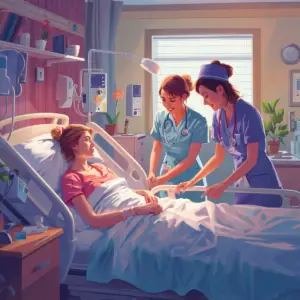
The Heartbreaking Reality: Who is Actually Protecting the Nurses?
 Nurse Stephanie
Who Is Protecting the Nurses? The Silent Crisis No One Wants to Talk About
By Stephanie
Nurses dedicate their lives to protecting others. We comfort the frightened, advocate for the vulnerable, and remain at the bedside during life's happiest and most heartbreaking moments. We show up on weekends, holidays, nights, and during disasters.
But who is protecting us?
Over the past several weeks, story after story has appeared in the news about nurses being punched, kicked, bitten, threatened, stabbed, or assaulted by patients and even family members. These incidents are no longer rare—they are becoming disturbingly common. Healthcare organizations and nursing groups continue to warn that workplace violence is increasing, and many nurses say they now go to work wondering if they will make it home without being physically or emotionally harmed.
The Fear That Nurses Rarely Admit
Many people assume nurses worry most about making a medication error or responding to a medical emergency.
Today, many nurses have another fear.
Will this patient become violent?
Will an angry family member scream in my face?
Will security arrive before someone gets hurt?
These thoughts have become part of everyday nursing in many hospitals.
Sadly, some nurses have become so accustomed to verbal abuse that they barely report it anymore. Others don't report physical assaults because they've heard the same response too many times:
"It's part of the job."
But being assaulted is not part of the job.
Why Is This Crisis So Quiet?
When a police officer is assaulted, it makes headlines.
When a firefighter is attacked, people demand justice.
When a teacher is injured, communities rally around them.
But when a nurse is assaulted?
Sometimes it barely makes the local news.
Sometimes it never leaves the incident report.
Many nurses feel pressured to move on quickly because the unit is short-staffed. Some worry about retaliation, being blamed for the incident, or being viewed as unable to "handle difficult patients." Studies and nursing organizations have long warned that workplace violence is underreported because many healthcare workers believe reporting won't lead to meaningful change.
The Hidden Cost
Violence doesn't end when the shift ends.
Nurses carry those experiences home.
Some replay the incident over and over.
Some struggle with anxiety before every shift.
Some leave bedside nursing altogether.
Others stay—but they no longer feel safe.
When experienced nurses leave because they no longer feel protected, patients lose experienced caregivers, new nurses lose mentors, and hospitals lose valuable staff.
This isn't just a nursing problem.
It's a patient care problem.
Hospitals Must Do More
Many healthcare organizations are taking steps to improve safety, but too many nurses still feel those efforts don't match the reality they face. Calls for stronger security, better staffing, improved reporting systems, de-escalation training, and meaningful consequences for violence continue across the profession.
Every nurse deserves:
- A workplace where safety is a priority—not an afterthought.
- Security that responds immediately.
- Enough staff to safely care for patients.
- The freedom to report violence without fear.
- Leadership that treats every assault as unacceptable.
Zero tolerance should mean zero tolerance.
To the Families
Most families are kind, grateful, and respectful.
But for those who aren't, remember this:
The nurse standing in front of you is someone's mother.
Someone's father.
Someone's daughter.
Someone's son.
Someone's spouse.
Someone's best friend.
They deserve the same respect they are giving your loved one.
To My Fellow Nurses
If you've ever been yelled at...
Threatened...
Hit...
Spit on...
Or gone home crying after a shift...
You are not alone.
Your safety matters.
Your life matters.
And your voice deserves to be heard.
Because caring for patients should never mean risking your own life.
It's time we stopped treating violence against nurses as "just part of the job."
It never was.
And it never should be.